
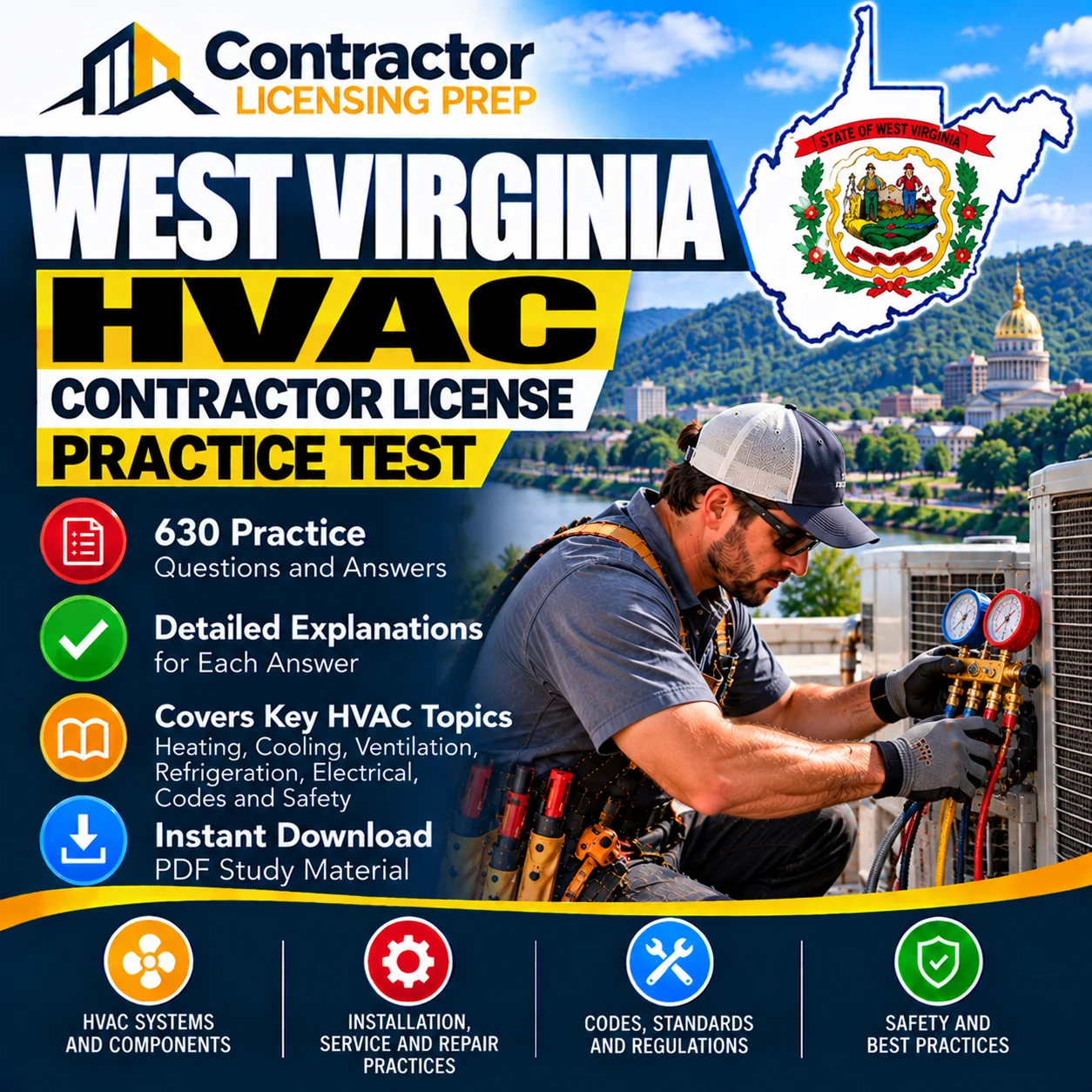
Description
Sample Questions
Question 1. During a cooling system inspection, a technician finds that the evaporator coil is freezing even though the indoor fan is running. Which condition should be investigated first?
A. Restricted airflow across the evaporator coil
B. Excessive outdoor lighting
C. A higher-than-normal thermostat setting
D. An oversized condensate drain
Correct Answer: A. Restricted airflow across the evaporator coil
Answer Explanation:
Restricted airflow reduces the amount of warm indoor air passing over the evaporator coil. As a result, the refrigerant may absorb insufficient heat, causing the coil temperature to fall below freezing and moisture to form ice. Common causes include a dirty air filter, blocked return-air grille, dirty evaporator coil, or improperly adjusted blower. The technician should check airflow and static pressure before deciding whether a refrigerant-related problem also exists. Replacing refrigerant without diagnosing the underlying cause may fail to resolve the issue and can create additional system problems.
Why the other options are incorrect:
B. Outdoor lighting has no direct effect on evaporator airflow or coil temperature.
C. A higher thermostat setting does not normally cause an evaporator coil to freeze from restricted heat transfer.
D. A condensate drain problem may cause water leakage, but it is not the first suspected cause of evaporator icing.
Quick Study Guide:
Evaporator icing can indicate restricted airflow or a refrigerant-system problem.
Inspect the filter, blower, coil, and return-air path.
Check airflow and system operating conditions before replacing components.
Question 2. A contractor is estimating the cooling load for a small commercial building. Which factor should be included when determining the required air-conditioning capacity?
A. The number of service tools stored in the mechanical room
B. The brand of the building’s electrical panel
C. Heat gain through windows, walls, occupants, lighting, and equipment
D. The length of the condensate drain alone
Correct Answer: C. Heat gain through windows, walls, occupants, lighting, and equipment
Answer Explanation:
Cooling load calculations estimate how much heat an air-conditioning system must remove to maintain the desired indoor temperature and humidity. Important factors include the building’s size, insulation, window area and orientation, outdoor design conditions, occupancy, lighting, and heat-producing equipment. Solar heat gain through windows can substantially affect cooling demand, while poor insulation increases heat transfer through the building envelope. Accurate calculations help contractors select appropriately sized equipment. An undersized system may struggle to maintain comfort during hot weather, while an oversized system may cycle frequently and provide inadequate humidity control.
Why the other options are incorrect:
A. Stored service tools do not normally contribute meaningfully to the building’s cooling load.
B. The electrical panel’s brand does not determine the building’s required cooling capacity.
D. Drain length alone cannot establish the total heat gain that the air-conditioning system must remove.
Quick Study Guide:
Review sensible and latent heat loads.
Understand heat transfer through walls, roofs, and windows.
Consider occupants, lighting, and equipment when estimating cooling demand.
Question 3. A packaged air-conditioning unit starts its blower, but the compressor does not start when the thermostat calls for cooling. Which component should be checked as part of the control circuit diagnosis?
A. The thermostat’s cooling call and the compressor contactor circuit
B. The condensate drain’s exterior termination
C. The supply duct insulation thickness alone
D. The return grille’s decorative finish
Correct Answer: A. The thermostat’s cooling call and the compressor contactor circuit
Answer Explanation:
When the blower operates but the compressor remains off, the contractor should systematically inspect the cooling control sequence. First, verify that the thermostat is calling for cooling and that the required control voltage reaches the appropriate circuit. Next, inspect the compressor contactor, its coil, associated wiring, and any safety devices that may interrupt operation. Depending on the system design, a pressure switch, overload, or other protective control may prevent compressor startup. Electrical testing must follow the manufacturer’s procedures, with appropriate isolation and safety precautions. Replacing a contactor without confirming the underlying fault may not correct the problem.
Why the other options are incorrect:
B. A condensate drain termination does not normally explain why the compressor fails to start, although a safety switch associated with condensate overflow can interrupt operation.
C. Duct insulation affects thermal performance but does not directly diagnose a compressor control failure.
D. The appearance of the return grille has no diagnostic value for the compressor control circuit.
Quick Study Guide:
Understand thermostat calls and control voltage.
Learn the purpose of contactors, relays, and safety switches.
Follow safe electrical testing procedures before replacing components.
Question 4. During an HVAC installation, a contractor discovers that a long supply-air duct has excessive air leakage at its joints. What is the most appropriate corrective action?
A. Increase the thermostat setting to compensate for lost airflow
B. Seal the duct joints using materials approved for the duct system and applicable requirements
C. Close all return-air grilles to increase supply pressure
D. Remove insulation from the duct to improve air circulation
Correct Answer: B. Seal the duct joints using materials approved for the duct system and applicable requirements
Answer Explanation:
Leaking duct joints allow conditioned air to escape before reaching the intended rooms. This can reduce system efficiency, create uneven temperatures, increase operating costs, and affect the pressure balance of the building. The contractor should locate the leakage and seal the joints using approved materials suitable for the duct construction and operating conditions. The completed installation should be inspected to verify that connections are secure and comply with applicable mechanical codes and duct construction standards. Insulation must also be maintained where required to limit unwanted heat transfer and prevent condensation on cold duct surfaces.
Why the other options are incorrect:
A. Raising the thermostat setting does not repair leakage and may increase energy consumption.
C. Closing return-air grilles can restrict airflow and create additional system performance problems.
D. Removing insulation increases heat transfer and may contribute to condensation rather than solving leakage.
Quick Study Guide:
Understand duct leakage and its effect on system performance.
Use compatible, approved duct-sealing materials.
Review duct support, insulation, and applicable construction standards.
Question 5. Before servicing a commercial HVAC unit, a contractor must inspect an electrical component inside the equipment cabinet. Which action best follows safe work practices?
A. Assume the equipment is de-energized because the thermostat is off
B. Remove the cabinet cover while the unit is operating to identify the fault
C. Disconnect only the control wiring and begin work immediately
D. Isolate the applicable energy sources, apply lockout/tagout procedures as required, and verify the absence of voltage before working
Correct Answer: D. Isolate the applicable energy sources, apply lockout/tagout procedures as required, and verify the absence of voltage before working
Answer Explanation:
HVAC equipment may contain hazardous electrical energy even when the thermostat is switched off. Safe servicing requires identifying the applicable energy sources, disconnecting and isolating them, and following the required lockout/tagout procedures. A qualified worker must verify that the equipment is de-energized using an appropriately rated testing instrument and safe testing practices. Stored energy, such as that present in capacitors, must also be addressed according to the manufacturer’s instructions and applicable safety requirements. These precautions reduce the risk of electric shock, burns, unexpected equipment startup, and serious injury during inspection, repair, or maintenance.
Why the other options are incorrect:
A. Switching off the thermostat does not guarantee that hazardous electrical power has been isolated.
B. Opening equipment while it is operating can expose the worker to moving parts and electrical hazards.
C. Disconnecting control wiring does not necessarily isolate the equipment’s main electrical supply or stored energy.
Quick Study Guide:
Review electrical isolation and lockout/tagout procedures.
Verify the absence of voltage before beginning electrical work.
Follow applicable OSHA requirements and manufacturer safety instructions.
Ready to Download the Complete Practice Test?
Get the complete downloadable practice test with answer explanations and continue preparing at your own pace.




Reviews
There are no reviews yet.